AI chatbots have gone from “Hey, that’s cute” to running customer support, closing sales, managing bookings, and pretty much replacing that one employee who was always on break. If you’re a business owner, developer, or someone who’s been peer-pressured into digital transformation, you’ve probably encountered the buzz already. Let’s break down what AI chatbots actually are, how they’re made, what they cost, and how AOX APPS makes this whole journey a lot less complicated.
What Even Is an AI Chatbot?
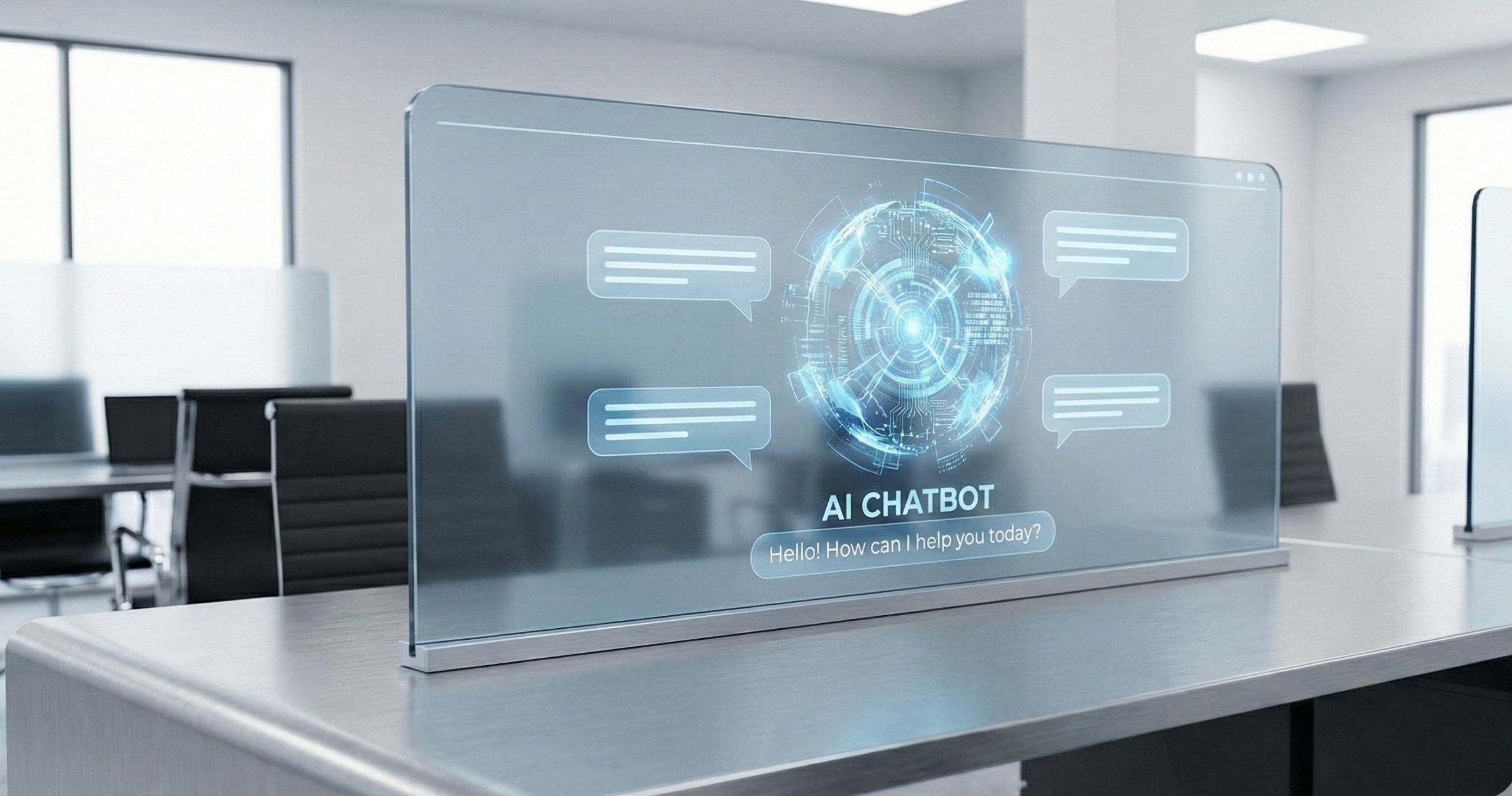
An AI chatbot is software that communicates with humans using natural language — basically a digital brain that sits in your app, website, or messaging channel and tries to sound smarter than it is.
Unlike those early “Press 1 for support” robots that treated users worse than automated bank menus, modern chatbots understand context, intent, and language, and can adapt responses based on experience. Think less Siri 2011 and more Jarvis-level assistant (well, getting there).
How AI Chatbots Actually Work (Without a PhD Explanation)

If you want the $200,000 Computer Science explanation: neural networks, machine learning, NLP, data pipelines, LLM fine-tuning, and computational linguistics.
If you want the real-world explanation:
-
User asks a question
-
Chatbot interprets it
-
Chatbot finds or generates an answer
-
User either says “Wow, that’s helpful” or rage-clicks the exit button
Under the hood, the tech stack typically includes:
-
NLP (Natural Language Processing) → Helps the bot understand text
-
Machine Learning → Helps it improve over time
-
Knowledge Base / APIs → Provides information or performs actions
-
Large Language Models (LLMs) → These are the big brains trained on massive datasets
-
UI Layer → Where users actually talk to it (web chat, app, WhatsApp, etc.)
How Are AI Chatbots Built?
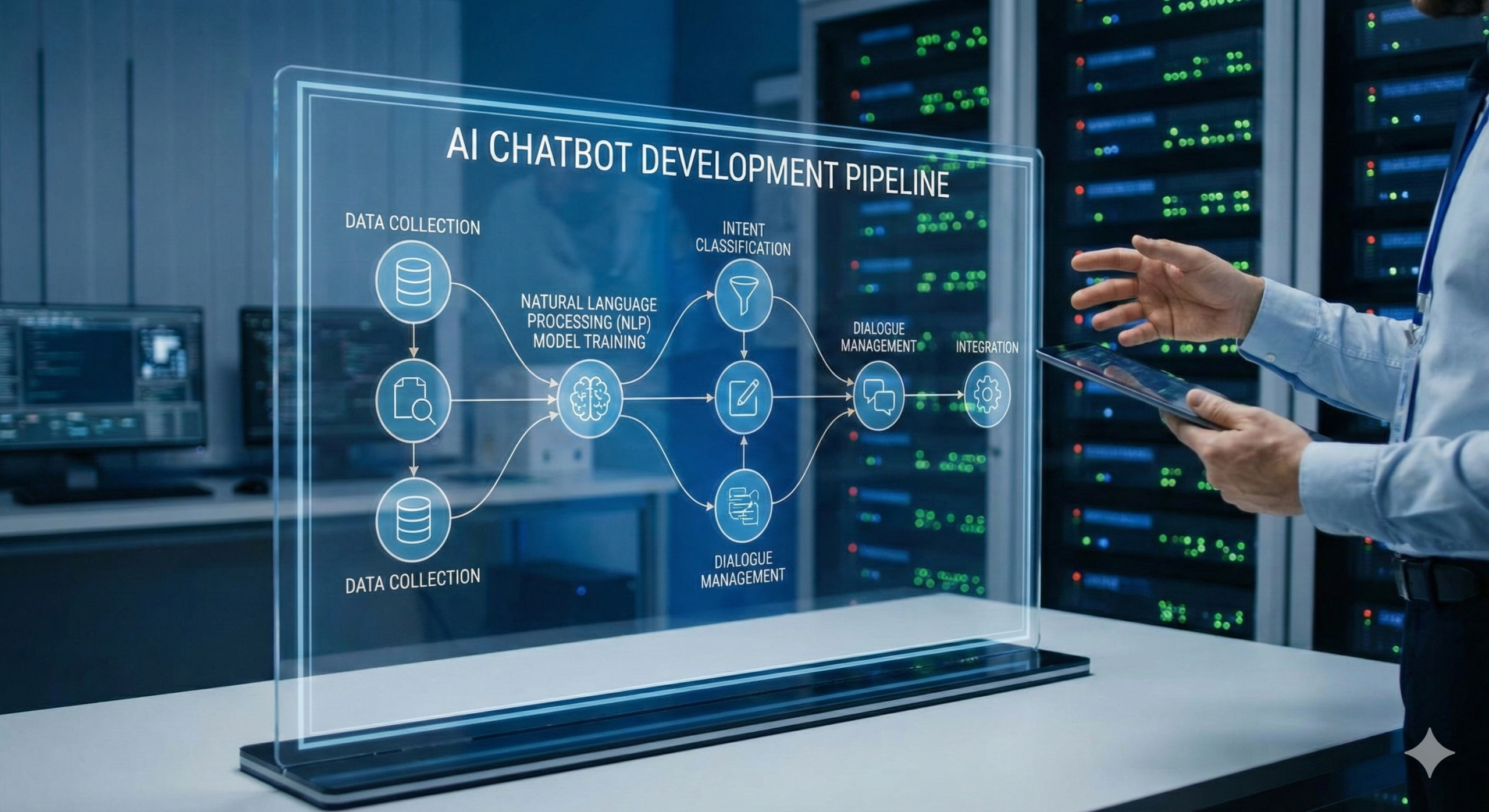
While there’s no single magical formula (yet), the ai chatbot development process usually looks like this:
1. Define the Goal
Is the chatbot for:
-
customer support?
-
sales?
-
appointments?
-
internal company workflows?
-
or just because your competitor has one and your CEO freaked out?
2. Train the Brain
Developers feed it:
-
websites
-
product data
-
FAQs
-
manuals
-
CRMs
-
APIs
-
knowledge bases
Basically everything except gossip, though that might be a future feature.
3. Integrate With Systems
To do things like:
-
schedule meetings
-
check order status
-
process refunds
-
generate leads
-
fetch analytics
4. Test It
Because nobody wants a chatbot that recommends vacuum cleaners to someone asking for legal advice.
5. Deploy + Improve
AI chatbots improve with feedback loops, learning from users and evolving over time (which is cute until they start demanding salary reviews).
Types of Chatbots Used in Business Today
Not all chatbots are created equal — some are smart, some are scripted, some are glorified FAQ pages with a round avatar. The main categories:
1. Rule-Based Chatbots
Structured, predictable, a bit like your accountant.
Runs on logic trees: “If user says ___, then send ___.”
2. NLP Chatbots
Can understand natural language.
Not the smartest, but way better than “Press 1 for billing.”
3. AI/ML Chatbots (LLM-powered)
Uses machine learning + transformer models.
This is where things start getting spooky-smart.
4. Generative AI Chatbots
These can create content (emails, proposals, troubleshooting steps, legal disclaimers… hopefully accurate ones).
5. Voice AI Assistants
Think Alexa, Google Assistant, and customer support lines that pretend they’re human.
6. Industry-Specific Chatbots
Currently deployed in:
-
E-commerce (upsell + customer support)
-
Healthcare (appointment + triage)
-
Finance (KYC + customer service)
-
Real Estate (qualification + scheduling)
-
Hospitality (concierge + bookings)
-
SaaS (support + onboarding)
-
Education (tutoring + course assistance)
-
HR (employee queries + onboarding)
Pretty much everywhere except maybe your grandma’s knitting club — and honestly, give it a year.
How Much Does It Cost to Build an AI Chatbot?
Here’s the part everyone asks right before muting the CFO:
| Type | Typical Cost Range |
|---|---|
| Basic scripted bot | $3,000 – $10,000 |
| NLP-enabled bot | $15,000 – $40,000 |
| AI/LLM-powered bot | $50,000 – $300,000 |
| Enterprise + full integrations | $200,000 – $1M+ |
Costs depend on:
-
complexity
-
integrations
-
custom AI training
-
conversational design
-
hosting & ops
-
compliance/security
-
user volume
And yes, you can also “rent” AI capabilities (usage-based models) instead of building everything from scratch — welcome to SaaS capitalism.
So Where Does AOX APPS Come Into This?

Glad you asked.
AOX APPS builds modern AI chatbot solutions that businesses actually use — not just brag about on LinkedIn.
What AOX APPS Offers
-
Custom chatbot development
-
LLM-powered conversational AI
-
API + CRM integrations
-
Industry-specific bot templates
-
Training & analytics
-
Deployment across platforms (Web, iOS, Android, WhatsApp, Messenger, SMS)
-
Post-launch support (aka “we won’t ghost you”)
Why Businesses Choose AOX APPS
Because:
-
They want automation that increases revenue, not just reduces support tickets
-
They want technology that works with their existing systems
-
They want AI without needing an internal AI team
And because — let’s be honest — building this in-house is like trying to assemble a space shuttle with IKEA instructions.
Final Thoughts
AI chatbots are no longer optional. They are:
-
faster than support agents
-
cheaper than call centers
-
scalable 24/7
-
and surprisingly good at selling things
If you’re thinking about launching one, upgrading your existing setup, or replacing a bot that currently frustrates your customers into submission — AOX APPS is a solid partner to make it happen.